A Past That Never Was
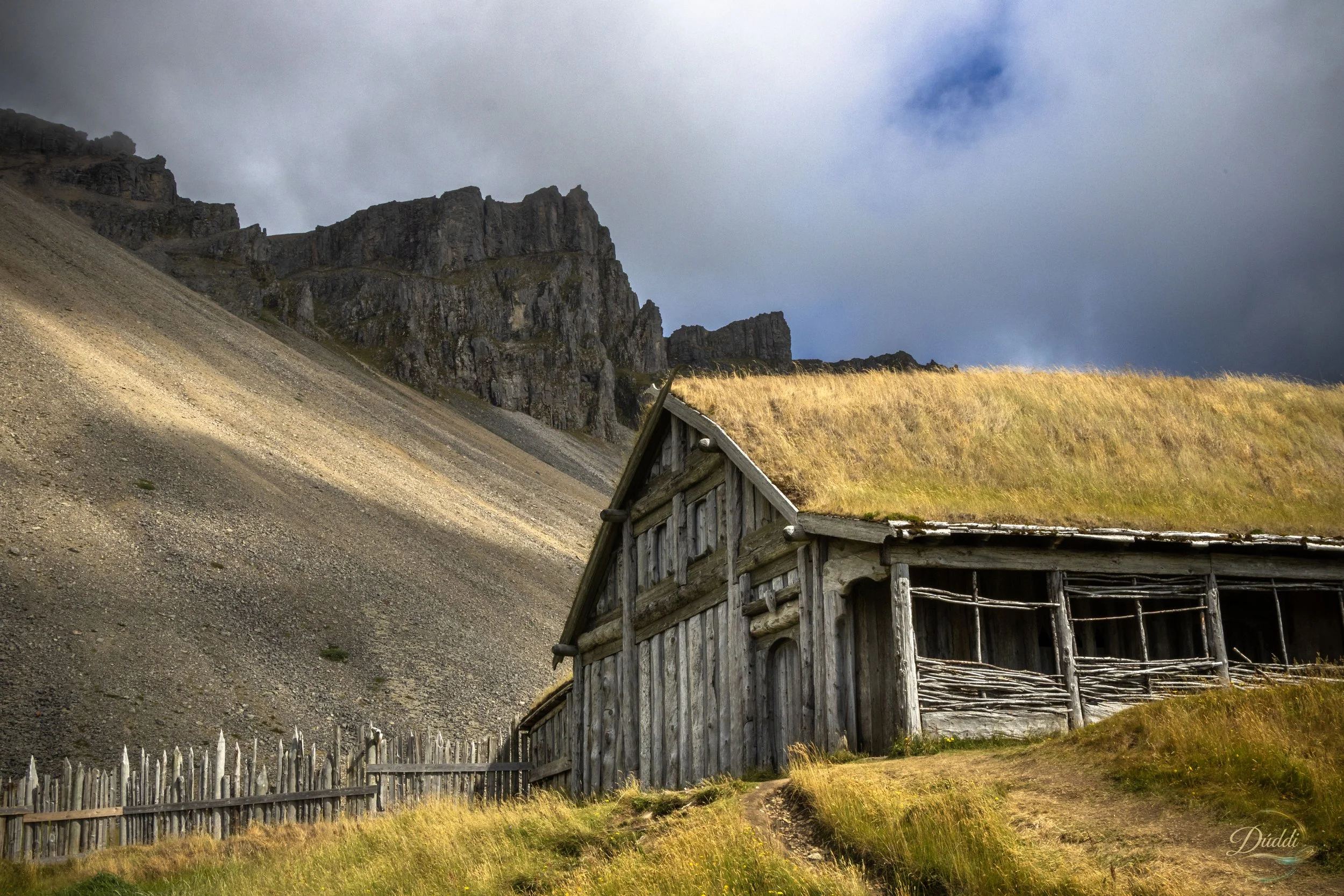
There is something wonderfully deceptive about the Viking Village beneath Vestrahorn.
At first sight, it seems to belong to the mountain.
Weathered timber, grass-covered roofs and rough wooden fences sit beneath the dark slopes as though they have been there for centuries. The buildings seem almost to have grown old together with the landscape.
But they haven't.
The village at Stokksnes is not an archaeological site, nor is it the carefully preserved remains of an Icelandic settlement. It was built in 2009 as a film set for a movie that was never filmed there. Much of it was constructed from driftwood gathered from the beach and old telephone poles.
In other words, it is a place built to tell a story that was never told.
And perhaps that is exactly why I find it so interesting to photograph.
When fiction begins to age
A film set is normally temporary.
It exists long enough for cameras to capture an illusion. When the actors leave and the cameras stop rolling, its purpose has been fulfilled.
But this village remained.
Year after year, Iceland began doing something no production designer could completely reproduce.
Rain darkened the wood. Wind worked on the roofs. Grass grew thicker. Timbers twisted and weathered. Things began to sag.
The illusion itself started to grow old.
Today, when I walk between these buildings with my camera, I am photographing something rather difficult to define.
It isn't Viking history.
But it isn't simply a film set anymore either.
Time has become part of the construction.
A strange kind of authenticity
That creates an interesting question for a photographer:
What makes something feel authentic?
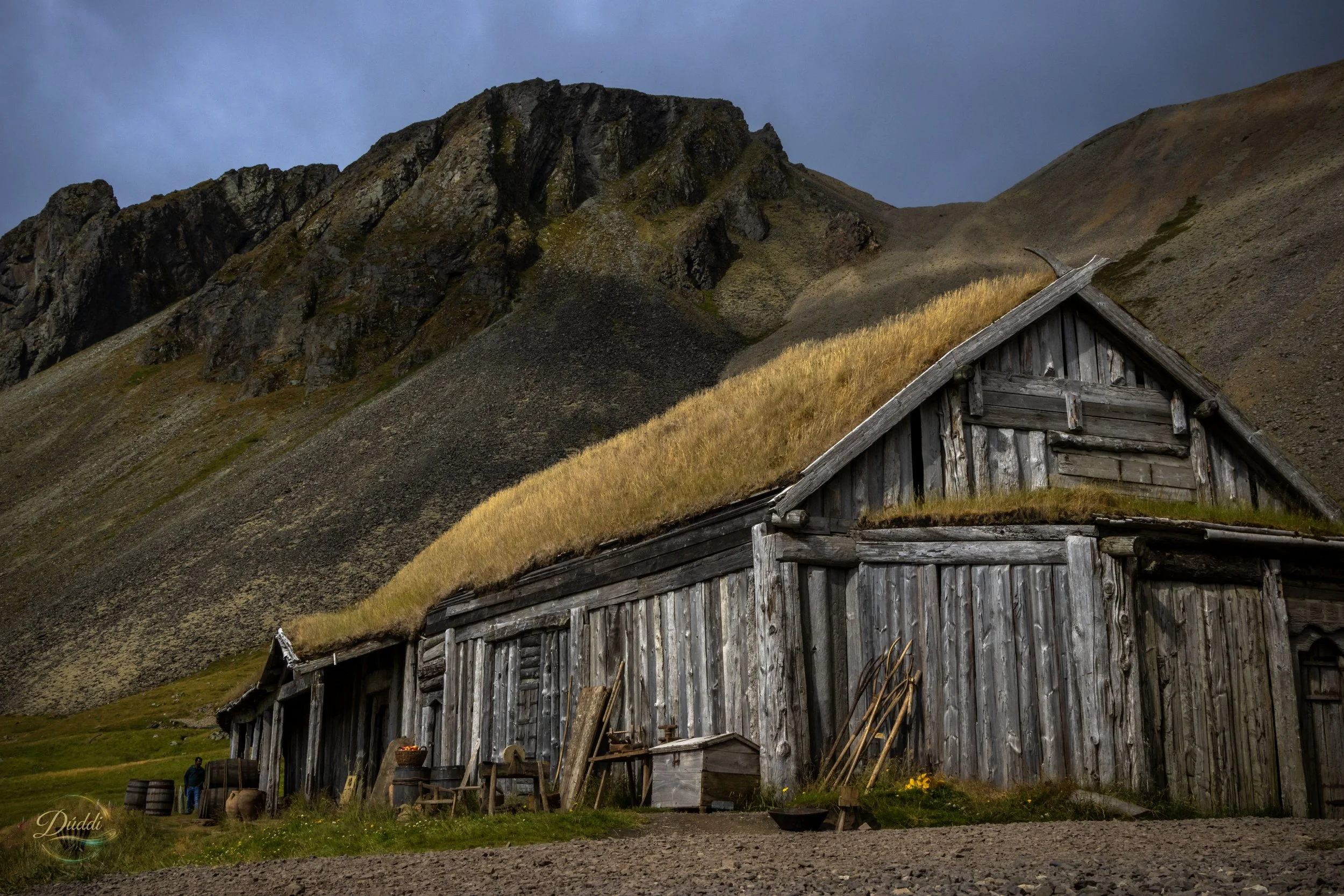
We know these buildings are modern. We know no Viking family gathered around a fire inside them a thousand years ago. No child was born here in the tenth century. Nobody stood in one of these doorways waiting for a ship to return.
And yet our imagination has very little difficulty putting them there.
Perhaps the mountain helps.
Vestrahorn needs no set designer.
Its cliffs were already ancient beyond anything the human mind can easily comprehend when the first settlers arrived in Iceland. The landscape surrounding the village is real, enormous and indifferent to the distinction between history and fiction.
Place a weathered wooden building beneath it and suddenly our minds begin writing the missing story.
That is one of the things photography does particularly well.
A photograph does not necessarily tell us what happened.
Sometimes it simply gives us enough pieces to imagine what might have happened.
The details tell another story
Walking around the village, I found myself drawn not only to the buildings themselves, but to the smaller scenes.
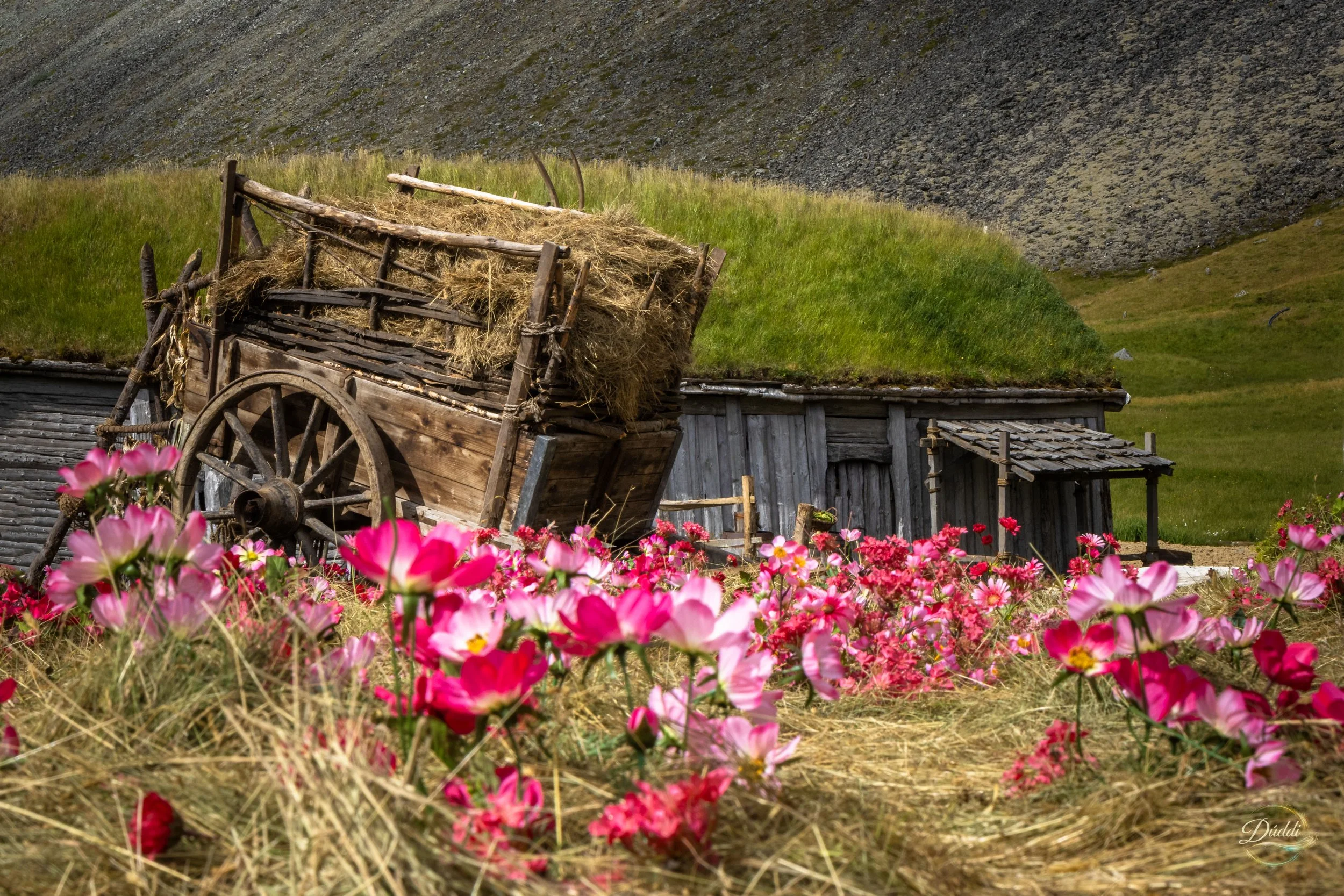
An old cart slowly surrendering beneath a collapsing load of hay.
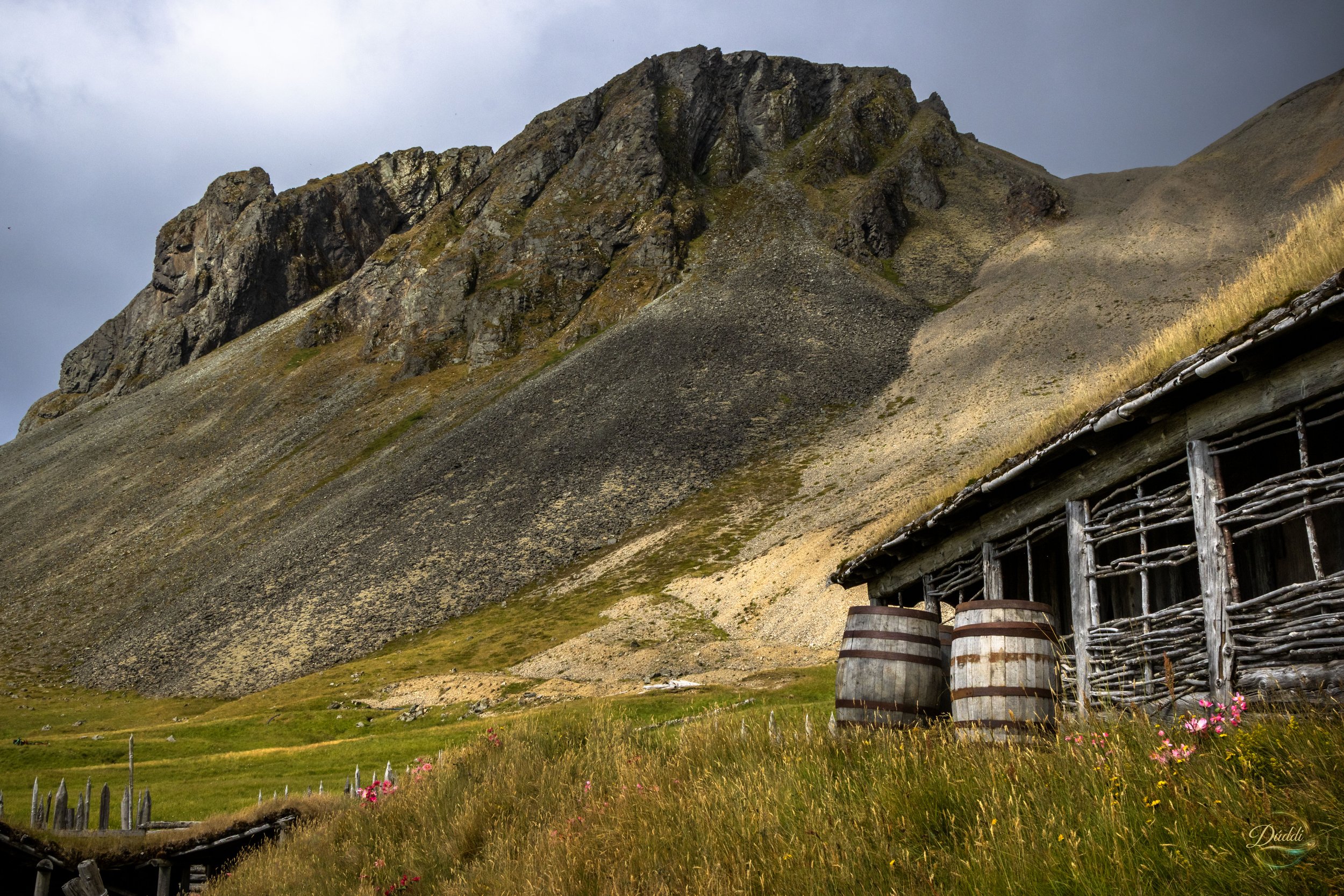
Barrels beside a wall.
Rough branches woven between wooden posts.
Wildflowers growing among objects deliberately placed there years ago to create an imaginary world.
Some of those objects were props.
The flowers are not.
Neither are the weather, the mountain, the grass or the years that have passed since the village was built.
And somewhere between those things, fiction and reality have become strangely entangled.
The people who built the village were trying to make something new look old.
Time has been finishing the job ever since.
Photographing a story rather than a place
I have never been particularly interested in photographing a location simply to prove that I was there.
Thousands of photographs can show what Vestrahorn looks like.
What interests me is what happens when landscape, light and an object within it begin to suggest something beyond themselves.
On this visit, sunlight occasionally broke through the clouds and travelled across the mountain and the grass roofs. The old grey timber remained dark while the grass suddenly turned almost golden.
For a few seconds, a building constructed for an abandoned film project no longer looked like a film set.
It looked as though it belonged there.
And I pressed the shutter.
Perhaps photography is allowed to lie a little.
Not by changing what stood in front of the camera, but by allowing the viewer to forget, for a moment, everything that stood outside the frame.
The village that survived its film
There is a lovely irony in the history of this place.
It was created so that a camera could turn it into a Viking village.
The intended film never gave it that life.
Instead, thousands of other cameras eventually did.
Travellers walk beneath Vestrahorn and photograph these buildings. Filmmakers have returned to the area. The village has become an attraction in its own right, while Vestrahorn itself continues to draw photographers from around the world.
A place created as a background has become the subject.
And perhaps that is the most interesting transformation of all.
The Viking Village at Stokksnes is fake.
The mountain is real.
The weathering is real.
The years are real.
And the photographs are real.
Somewhere between all of them lives a past that never actually existed.
Sometimes, that is enough to make a story worth telling.